Author: bruce

  • 8 Steps to Transform Your Life

    8 Steps to Transform Your Life

    “Motivation is what gets you started. Habit is what keeps you going.”

    About 90% of all coronary bypass patients have not changed their lifestyles 2 years after their surgery. Why?

    Is it because of a lack of motivation? Lack of knowledge? Or is it that they don’t believe that it’s possible to transform your life?

    We all have something in our lives we would like to change. Most of us have tried, often many times, and “failed”. Here are a few practical tips and ways to succeed in all steps of a lifestyle transformation.

    Step 1 – Figure out the problem and your values

    First, you must figure out and recognise the problem. For a thing to turn into a problem, it must cause some kind of inconvenience in our lives.

    For example, being overweight. As long as being overweight doesn’t cause us any harm (social, mental or physical) the subconscious doesn’t see a need to use any valuable time or energy to solve the problem.

    There must be strong enough stimuli attached to the problem. Often it is the diagnosis of a new illness, the death of a parent from the same illness, decline in quality of life, social stigma or the fear of the future.

    Everyone must find the most important “why” – the most important reason why something must be done.

    Step 2 – Change your mentality

    Before a big step is taken in a lifestyle change, the subconscious must be made to believe that it is possible.

    Most changes are left “stuck” in this step because we do not really believe that we could do it. We imagine the change in our heads; of a big, scary, difficult, and almost impossible challenge.

    For our lives to change for the better, we have to be made to believe that it is possible.

    The best way to do this is to get to know people who have succeeded in the change – either personally or by reading their stories.

    “If they could do it, I can do it too!” is most often a good enough motivation to go to the next step.

    Step 3 – Increase your knowledge; find more information from different sources

    Before we can successfully start a big change in our lifestyle, we must have enough theoretical information about the subject. Without knowledge, we get stuck in the beginning, and then we lose our motivation and lose our way.

    Luckily, information can be obtained in many ways, but some sources of information must be taken with a bit more scepticism. You can find reliable information if you learn to filter out the nonsense.

    For example – discuss with people who have succeeded, join Facebook groups, but don’t simply follow the advice of every “armchair expert”!

    If you want to delve deeper into the subject, buy a book about it.

    Reading always pays off, said Finnish writer Jörn Donner. The problem is that people get stuck in the “paralysis of analysis” and are unable to take the next step.

    Step 4 – Replace old habits with new ones

    An excellent book “The Power of Habit” by Charles Duhigg highlights how important it is to find new habits to replace old and unwanted ones.

    Immediately quitting an old habit hardly ever gives permanent results. We have to analyse openly and honestly the habits which prevent us from reaching a state that we are striving for.

    Replacing old habits with new ones is an incremental process and a setback is usually caused by trying too many things at once. Preferably replace 15 minutes of TV with 15 minutes of reading or one cigarette a day with a 5-minute walk.

    According to Duhigg, small changes eventually cause big changes for other aspects of life. Small positive results give us motivation to keep on going and developing.

    Patience is the key.

    Step 5 – Accept “failure”

    Do you feel that you always fail when you try? Failure is a part of the process.

    You must prepare for it. If we avoid it and just concentrate only on success, we burn out and crash.

    It’s particularly important to accept setbacks and failures beforehand. Because every process of change includes setbacks and outright failures.

    Dieters, entrepreneurs, alcoholics and kids’ parents know it.

    Therefore, we should not see it as failing because every error or setback is an experience – a possibility to analyse and learn. It is a part of a change.

    The road to our goal is not straight. If we accept that and forgive ourselves, we will rise faster and continue our lifestyle change.

    Step 6 – Prioritise

    In the book “High-Performance Habits” Brendon Burchard says that people who monitor their progress regularly are 2.5 times more likely to succeed in their goals. Monitoring motivates them to stay on track towards their goals and prioritise their energy.

    I monitor my weight and caloric intake almost every morning because, without that, I would forget how important a process it is to me.

    The other principle in a continuous successful lifestyle change is prioritising.

    It is an outright impossibility for the modern person to fit “all of the important things” in a 16-hour day.

    In his book, “The One Thing”, Gary Keller teaches that in every aspect of life, we should determine one most important thing that takes all of our attention and time, or else we end up with a lot of things that are not achievable.

    I am not much of an advocate of “a balanced life” because I know how many secondary things must be left undone to achieve goals.

    Life is full of cruel prioritising.

    Step 7 – Embrace obsession

    In all processes of change where something better is the goal, “failures” are inevitable.

    But despite how many times we fall down, we have to get back up.

    A small amount of obsession is a good thing. Most of us know the feeling of being so excited about something that we cannot think about anything else. And that obsession quickly takes us past our setbacks.

    I give myself the freedom to obsess about big goals because I know it will help me through more difficult times.

    Grant Cardone says in his book, “Be Obsessed or Be Average”, that obsession is a necessity if you want great results, and that without it results will be mediocre or non-existent.

    Most of the time I agree.

    Step 8 – Develop permanent systems for change

    In “The Power of Habit” Duhigg explains how habits are formed and how they work.

    When you are learning how to drive a car, you must constantly watch the speed, steering wheel, traffic signs, gears and pedals. After a month or two, these things come automatically. But how?

    Our brains learn to move repeating tasks into our subconsciousness so that they do not require constant notice and energy from us.

    The same happens with lifestyle changes.

    Healthy eating, regular exercise and bedtime become automatic after a few months.

    There are bound to be setbacks, nothing is 100% perfect, but we know now that by following a system and understanding our own mind, creating the habit is already significantly easier.

    Success happens every day when you decide to change.

  • Top 5 Weight Loss Mindset Tips

    Top 5 Weight Loss Mindset Tips

    A strong, positive mindset is one of the most important tools on your weight loss journey.

     With the right mindset, you’ll find facing weight loss challenges and sticking to your weight loss goals a breeze. However, developing and maintaining a positive weight loss mindset can be difficult.

    That’s why in this article I’m going to be listing five top weight loss mindset tips.

    Tip 1 – Be Patient

    If you’re trying to lose a large amount of weight then you need to accept that it’s going to be a long term process and stay patient as your work towards your final fat loss goal.

    Most healthy weight loss programs will result in around 2lbs of fat loss per week, so use this as a benchmark and get a general idea of how long it’s going to take to achieve your desired amount of weight loss.

    Then when impatience sets in, remind yourself that reaching your weight loss goal will take time but every day is taking you a step closer to your ultimate fat loss goal.

    Tip 2 – Learn to Focus on Successes

    As with many long term goals, it can sometimes seem natural to focus on the negatives on your fat loss journey. However, by doing this, you’re ignoring all the positive steps you’ve made along the way and setting yourself up for disappointment.

    So next time something doesn’t go to plan on your weight loss journey and you feel disappointment setting in, make an effort to think about all the positive steps you’ve made that week.

    By doing this, you’ll quickly realize that the positives heavily outweigh the negatives, feel more motivated and discover that you’ve got nothing to be disappointed about.

    Tip 3 – Accept That Setbacks Will Happen

    While it’s important to focus on successes and not setbacks, you still need to accept that setbacks will happen.

    Once you accept that they’re a necessary part of your weight loss journey and something that you can use to make yourself stronger and more motivated, you’ll stop seeing them as a negative thing, they’ll have much less control over you and you’ll find it much easier to stay motivated.

    Tip 4 – Meditate Daily

    Meditation allows you to clear your mind of negative thoughts and puts you in a neutral mental state from which you can then build positive, constructive thoughts.

    By meditating daily, you’ll find it much easier to implement the three tips above and maintain an increasingly strong positive mental attitude which helps you achieve your weight loss goals.

    Tip 5 – Get At Least 6 Hours of Sleep Every Night

    Getting at least six hours of sleep every night has both a physical and mental impact on your weight loss efforts.

    First, it gives your weight loss efforts a physical boost by stimulating the release of growth hormone (a hormone that promotes fat burning). It also gives your weight loss efforts a mental boost by naturally suppressing your appetite and increasing your energy levels.

    Therefore, by getting at least six hours of sleep each night, you’ll put yourself in a mental state where you’re less likely to overeat and more likely to exercise which is exactly what you want if you’re trying to lose weight.

    Summary

    With the right mindset, you can achieve any weight loss goal that you set yourself. So if you’re currently having issues with motivation or discouragement when it comes to weight loss, make sure you implement all five of these tips and start realizing the benefits a positive mental attitude can have on your fat loss success.

  • Top 5 Weight Loss Lifestyle Tips

    Top 5 Weight Loss Lifestyle Tips

    One of the biggest issues people have when trying to lose weight is their lifestyle. They’re fully prepared to eat the right foods and do the appropriate exercises but then life gets in the way and throws all their hard work out the window. 

    The good news is that with a little planning and consideration, you can burn body fat while also dealing with the challenges that life throws at you.

    In this article I’m going to be helping you do exactly that by providing you with five of the best weight loss lifestyle tips.

    Tip 1 – Exercise In The Morning

    Exercising in the morning isn’t the only way to lose weight, or even the best way. However, if you lead a busy lifestyle, exercising first thing ensures that you get your workout in before the pressures of the day set in.

    Scheduling your workouts for later in the day when you’re already busy makes you a lot less likely to follow through with them. Therefore, if your schedule allows it, make your weight loss workouts the first thing you do when you wake up.

    The best workout is the one you actually do.

    Tip 2 – Prepare Healthy Food In Advance

    One of the main reasons people eat unhealthy meals is because they’re running short on time. They plan to eat healthy but then something comes up at short notice and they don’t have time to put together a healthy meal, so they grab some fast food instead.

    However, if you set aside some time each week to prepare a batch of healthy meals, then you’ll always have something healthy available for the times you’re in a rush and you’ll never have to resort to fast food as a quick fix again.

    Tip 3 – Always Carry Some Workout Clothes

    Even when you lead a busy lifestyle, you’ll find that sometimes appointments are cancelled or moved and you’re left with unexpected blocks of free time. These blocks of free time are a fantastic opportunity to get a workout in and burn some extra body fat.

    However, to take advantage of them, you need to have the right gear close by. Therefore, make a point of always carrying some workout clothes with you, so that if a block of free time opens up during the day at short notice, you’re fully prepared to make the most of it.

    Tip 4 – Walk When You Can

    Most people don’t walk as much as they could. They take the elevator instead of the stairs and use their car for short journeys that could be easily completed on foot.

    However, walking burns around 240 calories per hour, so by walking whenever you can during the day, you can give your fat loss efforts a notable boost. Just an hour of extra walking per day will burn off over 1,500 calories during the week and over 7,000 calories during the month.

    So next time you head for the elevator or grab the car keys, think whether that’s really the best decision for losing weight and if possible, turn it into an opportunity to add some extra walking to your day.

    Tip 5 – Be Flexible With Your Cheat Meals

    One big mistake people make when trying to lose weight is being too rigid with their cheat meals. They decide that one day of the week is their cheat day or allocate certain days and times during the week as cheat meals and then if they end up eating any cheat meals outside of these allocated slots, they feel guilty and disappointed.

    However, life is spontaneous and things will come up at short notice that make it difficult to stick to your healthy eating plans.

    So instead of beating yourself up about these spontaneous cheat meals, adapt your healthy eating schedule and give yourself a 10-20% cheat meal allowance during the week but don’t allocate dates and times to it. Then when you have a cheat meal at short notice, remove it from your allowance.

    This approach is much more flexible and allows you to adapt your healthy eating plans based on what life throws at you while still sticking to your healthy eating goals.

    Summary

    As you can see, with the right attitude, it’s possible to stick to your fat loss goals in any situation. So take another look at these tips, start implementing them today and ensure that your lifestyle doesn’t ever hinder your weight loss goals again.

  • Is Muscle Heavier than Fat?

    Is Muscle Heavier than Fat?

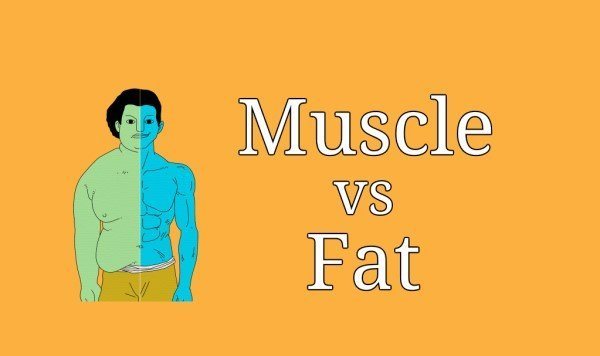
    Probably the single most frustrating and unnecessary debate that crops up again and again in fitness communities is the one about muscle vs fat.

    Is muscle heavier than fat?

    It usually begins with the pictures. A lady in a bikini shares her before and after pictures.

    She looks great in both. But in the first, she has a softer, curvy figure. And in the second she’s standing on stage ripped to shreds with well-defined muscles and barely an ounce of fat on her.

    Because she’s lost the fat she looks lighter in the second picture, but she comments that actually, she’s exactly the same weight. Whaaaat?

    “Yes”, she says, “because muscle is heavier than fat I look leaner but my weight hasn’t changed.”

    Then all hell breaks loose!

    “Muscle weighs the same as fat but it’s denser!”

    “Muscle and fat are the same weight but one takes up less space than the other!”

    And my favourite “A pound of muscle weighs the same as a pound of fat!”

    And the poor lady is left feeling confused and awkward.

    So let’s help her out and have a look at these “arguments”.

    “A pound of muscle weighs the same as a pound of fat.”

    No shit, Sherlock! And in that genius statement, we’ve established that every substance on the planet weighs exactly the same. That’s very helpful!

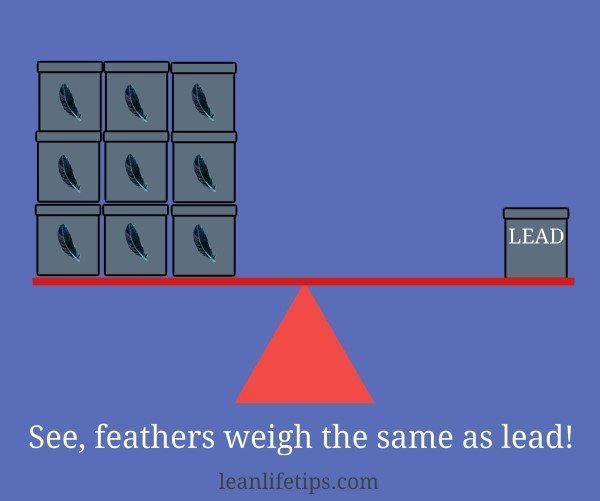
    A pound of muscle weighs the same as a pound of fat, just like a pound of feathers weighs the same as a pound of lead.

    Is Lead Heavier than Feathers?

    True as it is it’s totally irrelevant.

    In fact, that statement is totally misinterpreting the original comment, and shows a complete misunderstanding of basic equations. If you choose to make 1 pound the common denominator then her answer would not be muscle is heavier than fat but “fat is bigger than muscle”.

    “They weigh the same but muscle is denser.”

    Yes, muscle is denser. Good call.

    But what’s the definition of denser? The particles that make up the substance are more tightly packed.

    Density = mass per unit of volume

    When we compare the density of two substances we’re comparing the mass in a given volume of each. We’re not comparing the mass in a random volume of one versus a random volume of the other.

    To compare variables we need to take at least one common denominator then we can make a meaningful comparison between two substances.

    Not making sense?

    Ok, let’s take density as an example.

    Density = mass per unit of volume and the standard measure used is…

    density = kg/(cubic metre)

    To compare the density of two substances we’ve taken a common denominator (a volume of 1 cubic metre) and compared the mass of each to define a figure for density.

    Similarly for fat and muscle. Take one cubic meter of each and the one with the higher density (muscle) has the higher mass.

    “Muscle and fat weigh the same but the muscle takes up less space.”

    Another true observation, but simply another way of stating the same thing.

    If you take a piece of muscle and a piece of fat the same weight (1 pound now being the common denominator) because muscle is denser it takes up less space.

    So we can agree that muscle is denser and that a given mass will occupy less space than the less dense fat, so the problem must be the word “heavier”.

    (We should clarify that “mass” and “weight” are interchangeable because weight is simply a measure of the force of gravity on a mass as measured by the scales. If we’re both standing on the same planet then gravity is constant so weight can be assumed to mean mass.)

    “Heavy” as a word is subjective (although taking a small amount of mercury doesn’t seem to stop it being called a “heavy metal”). If I find a dumbbell heavy and you say it’s light then that just shows you’re stronger than me.

    But assuming we’re talking about the weight of a substance and not the seriousness of this conversation, the word “heavier” applied between two substances has a pretty definitive meaning. One has more weight than the other.

    So does muscle have more weight than fat?

    I think we’ve decided that due to it’s greater density a cubic metre of muscle does indeed have more weight than a cubic metre of fat.

    Does that mean muscle is heavier than fat? Only if we know how much of each we’re weighing (in this case one cubic metre).

    Right, so now it comes down to the volume. What size muscle are we weighing against what size of fat? We can’t say “a muscle” is heavier than “a lump of fat” because the size is ambiguous. But what about “muscle tissue” versus “fat tissue”.

    Now we’ve taken away the ambiguity of size but we still need two substances to measure, so the sensible option would be to take an equal amount (volume) of each and weigh them against each other. We’ve got our common denominator (volume) and we can now compare our variable (weight).

    Is it unfair to make that assumption? Well if we go back to our scientific definition of density there is an explicit assumption that there is a common denominator (cubic metre). The “concept” of density remains, the particles are always more tightly packed in the denser substance, but we can’t put a number on that until we give it volume.

    If it’s good enough for science, and it’s good enough for common sense, then in the absence of any amounts (specified or not) it should be totally reasonable to assume we’re comparing like for like.

    Still not convinced? Let me ask you another question.

    What’s the fastest animal in the world?

    Did you say cheetah?

    So is a cheetah faster than a warthog? NOT IF THEY’RE BOTH RUNNING AT 20MPH!

    The unspoken assumption is that we are applying a common denominator (a fixed attribute) which in this case is top speed.

    We can say a cheetah has a higher top speed than a warthog but we can’t say it’s faster… unless you assume a common factor—and we always do!

    From Wikipedia – “The fastest land animal is the cheetah…”

    If a cheetah is faster than a warthog then muscle is heavier than fat.

    This is not saying any amount of muscle is heavier than any amount of fat. And it certainly isn’t saying one pound of muscle is heavier than one pound of fat.

    What it’s saying is “all other things being equal, muscle tissue is heavier than fat tissue”.

    Getting back to our lady on the stage we can now see that she’s lost 5 pounds of fat and, by luck or judgement, gained 5 pounds of muscle.

    She looks smaller and weighs the same because, as she says, “muscle is heavier than fat”.

    What’s most frustrating about the whole conversation is that everyone is correct, including the woman who says muscle is heavier than fat!

    It is possible to lose fat, gain muscle, look leaner and still weigh the same. When it comes down to it, what matters for weight/fat loss is that people understand the principle of the argument. How you view that is just a matter of which side of the equation you approach it from.

    More importantly, if you’ve been mocking people for saying muscle is heavier than fat, you should stop being a dick about it!

    YOGA BURN REVIEW

    Disclaimer: I may be compensated as an affiliate for any products bought through links on this page. This will not cost you any more but it will help me offset my website costs and maybe the odd hair cut. Thank you!

  • 8 Weight Loss Motivation Tips

    8 Weight Loss Motivation Tips

    Losing weight requires time and patience because there aren’t any shortcuts. If you need to lose a few pounds, it will take a minimum of several weeks. Significant weight loss goals can take several months or even years, and that can lead to a loss of weight loss motivation.

    ​Keeping your motivation high will make it easier to weather those tough days when your weight loss goal seems out of reach.

    ​Use these tips to maintain your weight loss motivation and shed those pounds:

    1.     Place your favourite inspirational quotes on your mirror or refrigerator. A quick pick-me-up can save the day when your motivation is waning. It can also be an effective way to start your day.

     · Tape a few quotes to the bathroom mirror. Doing the same on the refrigerator door can prevent those dietary lapses.

    2.     Keep track of your progress. Keeping track of your progress is motivating and smart. How will you know if your diet and exercise plan is effective if you’re not taking regular measurements?

     · There are many ways to track your progress. Find and use the one that motivates you the most.

    3.     Use weight-loss jars as a visual reminder. Keeping written records of your weight loss is an effective exercise, but sometimes it’s difficult to appreciate a 2-pound loss in the mirror.

     · Fill a glass jar with decorative stones or marbles. Each one is equivalent to a pound you wish to lose. As you lose weight, move your marker from the full jar to an empty one. It’s exciting to watch the contents of one jar shrink as the other increases.

    4.     Hire a personal trainer. Getting to the gym regularly isn’t easy. Most of us are skilful at coming up with reasons why it makes sense to stay home. Knowing that your personal trainer is expecting you at the gym greatly increases your incentive to show up.

     · A good personal trainer will also track your progress and hold you accountable.

    5.     Find a workout or weight loss buddy. Losing weight can be a lonely process. Considering the obesity rates in first-world countries, there are plenty of others in the same situation. Find a buddy with whom you can communicate on a regular basis. Ideally, you can also find someone to join you for workouts.

    6.     Purchase new work out gear. Some new workout clothes and shoes can inspire activity. If your workouts are lagging, a new outfit might be just the motivation you need.

    7.     List your reasons for losing weight. After a few weeks of dieting, it’s typical to lose track of your original motivation. Make a list of all the reasons you want to lose weight. No reason is too small or petty, as long as it’s true.

     · Do you want to look better? Enhance your health? Fit into your old jeans? Write it down and review your list regularly.

    8.     Provide small rewards along the way. It could be a bad idea to wait until you’ve reached your final goal to reward yourself. Begin with small goals to get yourself started. Dieting becomes tougher after a while, so give yourself larger rewards as you progress.

    Keeping your motivation high is an important part of reaching any weight-loss goal. Losing weight is a slow process and progress can be difficult to see at times. Motivation is personal. What works for others might require a little tweaking to be effective for you.

     Stay focused on all the great progress you’re making and continue looking forward. A small amount of attention and motivation each day can keep your spirits and expectations high.

    FLAT BELLY FIX

    Disclaimer: I may be compensated as an affiliate for any products bought through links on this page. This will not cost you any more but it will help me offset my website costs and maybe the odd hair cut. Thank you!

  • Flat Belly Fix Review

    Flat Belly Fix Review

    The weight loss industry is littered with books, guides, reports and information of every kind that’s designed to help you shed the weight and also part with your money.

    Yet with all the information at people’s disposal, obesity statistics are still skyrocketing and as a society, we’re getting fatter and sicker than ever before.

    A bulging belly is a sign of poor health. In fact, just losing weight in this area will help to reduce your risks of diabetes and other problems. It also makes you look more attractive. So, you can bet that the weight loss industry will capitalize on this and try to make money by selling books showing you how to get a flat belly.

    The truth of the matter is that people don’t need more information – they NEED simplicity.

    The Flat Belly Fix review looks at a program that’s currently a bestselling product because it’s the epitome of simplicity when it comes to shedding the belly fat.

    With just 7 minutes a day of core toning exercises and a guide showing you how to manage your hormones and consume foods which aid in weight loss, you can get a toned midsection.

    This program has sold thousands of copies and has several success stories on its official website. Let’s look at it in greater detail.

    Flat Belly Fix Review

    The Good Points:

    One of the basic principles of the Flat Belly Fix is that you’ll need to spend 7 minutes a day, every single day, doing a series of ab exercises to tone your midsection.

    Anyone can spare 7 minutes. This is one of the biggest benefits of this program. It doesn’t require you to spend hours at the gym. Short daily sessions will more than suffice to give you a flat stomach.

    Todd Lamb used to lead a SWAT team in his previous career. He’s definitely experienced in physical training and knows what you need to do to get the best results without spinning your wheels and wasting time on long workouts. It’s like getting trained by a SWAT leader. Imagine that!

    Flat Belly Fix is backed by a 60-day money-back guarantee. 60 days is more than enough time to shed several pounds and see your stomach getting flatter by the day. If you don’t see any results, you can always get your money back. There’s no risk here.

    In the Flat Belly Fix system, you’ll only have a tea for breakfast. Lunch and dinner will need to be the meals suggested in the program.

    What’s interesting here is that it’s not the tea that aids in the weight loss, but the fact that by not having a full breakfast, you’ll be adopting a protocol known as intermittent fasting which is highly effective for weight loss. So, Todd has adapted that protocol and made it part of Flat Belly Fix.

    You’re provided with 15 smoothie recipes to help you get sufficient antioxidants and micronutrients in your diet.

    These will not only boost your immune system but the smoothies can also act as meal replacements since your body will still be getting the nutrients it needs. In fact, you’ll feel less hungry and have fewer cravings when you’re drinking these smoothies.

    This is a 21-day system which also focuses on leptin sensitivity, your hunger and appetite and other important factors that trip so many people up. When you can control your hormones, you can control your weight. This system will give you the tools to do that.

    The Flat Belly Fix guide is detailed and here is a list of chapters you’ll find inside the 21-Day System:

    Rationale
         – Hunger and Appetite
         – The Energy System Shift
    The Secret FBF Tea
    Benefits of Turmeric for Women
    Benefits of Turmeric for Men
         – How Much Per Day
    The Benefits of Chai Tea
    The Benefits of Green Tea
    Grass-Fed Butter
    Cinnamon
    Leptin Sensitivity
         – What is Leptin
         – Leptin and Weight Loss
         – Mastering Your Leptin Levels
         – Leptin, Exercise, Carbohydrates and Fats
         – Leptin and Interval Meals
    Insulin Sensitive and Resistance
         – What is Insulin?
         – How to Improve Your Insulin Sensitivity
         – How to Improve your Insulin Sensitivity Through Diet
    Medium Chain Triglycerides
         – MCTS for Reducing Fat Storage
         – Coconut Milk
         – MCT Oil
    Lactobacillus L. Reuteri
    Gender-Specific Benefits for Women
    Gender-Specific Benefits for Men
    The Protocol
    Meal Timings and Composition
    Visual References
    Food List
    Questions and Answers

    The Bad Points:

    As with all weight loss methods, consistency and patience are required. Flat Belly Fix will only work if you apply the information provided. Very often people don’t see the results come fast enough and they assume that the method doesn’t work… and they throw in the towel.

    This is a huge mistake. Weight loss is slow. Despite the hype on the Flat Belly Fix sales page, it will take some time. No doubt you’ll accelerate your weight loss with the methods in this guide, but you’ll not drop 20 pounds in 2 weeks. Be prepared to stay the course for at least 30 to 60 days.

    Your weight loss success will be dependent on your caloric state. You must be at a caloric deficit. The fat loss tea recipe is good and all, but you don’t really need it. What you truly need to focus on is your caloric intake. This rule should have been given more attention in the Flat Belly Fix guide.

    This product is only available as an online download. You’ll need a credit card or PayPal account to purchase it, and a computer to read the digital guide. You may print it for easy reference once you have access to it.

    Should You Get It?

    Yes. The creator of this product, Todd Lamb, is a highly qualified professional with serious credentials. Having spent years training in law enforcement and special tactics, he understands fitness and what you need to do to get in shape.

    If you’re looking to get fitter and don’t wish to spend hours at the gym, Flat Belly Fix is for you. This is a program made for the Average Joe/Joanne. It’s not a hardcore bodybuilding guide where you’re told to pump out sets and reps like a Terminator.

    No… this program is much more merciful. With 7 minutes a day, you can have a toned and flat belly. With the smoothie recipes, you can get sufficient nutrition without having to eat so much food.

    Can you see results in 21 days with this system? You can. Will the results blow your mind? Probably not… BUT… it’s a start.

    So many people try to lose weight and struggle without making any progress. In some cases, their weight even goes up despite their best efforts. This can be devastating to one’s ego.

    The Flat Belly fix requires a lot less effort and promises you faster results.

    Once you see that your weight is dropping without you having to slog it out at the gym or starve yourself, you’ll be motivated to carry on for another month or two… and before you know it, you’ll look like a brand new you.

    This program works. Period.

    FLAT BELLY FIX

    Disclaimer: I may be compensated as an affiliate for any products bought through links on this page. This will not cost you any more but it will help me offset my website costs and maybe the odd hair cut. Thank you!

  • Train Your Brain to Eat Less

    Train Your Brain to Eat Less

    How do you train your brain to eat less?

    You’re going along sticking to your diet when suddenly you hit a bump in the road. Maybe you skip breakfast and wind up eating a double bacon cheeseburger for lunch because you’re so hungry. Maybe you enjoy healthy dinners, but you snack on potato chips afterwards because your stomach is rumbling.

    Managing your weight is easier when you can control your appetite. Even if you’re a healthy size now, your body will slow down as you grow older. That means you’re liable to gain excess pounds just by eating the same amount as usual.

    Remember that hunger starts in your brain and so does the solution.

    Try these tips for training yourself to eat less.

    Train Your Brain to Eat Less by Changing What You Eat:

    Consume more fibre. Foods rich in fibre fill you up faster partly because they tend to be bulky and take longer to chew. As a bonus, they’re often highly nutritious and reduce your risk for many serious health conditions. Good choices include most vegetables, fruits and whole grains.

    Increase your protein. Protein also discourages hunger, and it helps you conserve muscle mass. Muscles burn more calories than fat. Spread your protein out in each meal and snack so your body can use it effectively. Choose lean sources like low-fat Greek yogurt and most seafood.

    Drink water. Sometimes we confuse thirst with hunger. Drinking a glass or two of water before meals may help you to reduce your portion sizes.

    Choose solid calories. Fancy coffee drinks and cocktails make it easy to down 600 calories or more before your brain knows what happened. Chewing your food gives your brain more time to feel full.

    Serve soup. The liquid in soup is a different matter because the high water content suppresses your appetite. Settle down with a bowl of minestrone on a cold winter day.

    Avoid artificial sweeteners. Using zero-calorie sweeteners can backfire. Scientists believe they prime your brain to want to eat more because they’re hundreds of times sweeter than sugar but don’t supply the energy the brain is expecting.

    Learn to Eat Less by Changing How You Eat:

    Act mindfully. Slow down and savour your food. You’ll digest it more completely, and you’ll probably eat less.

    Buy smaller plates. Several studies confirm that food looks and feels more abundant when you place it on a smaller serving piece. It’s a simple way to have your cake and eat lighter too.

    Sleep well. One of the reasons why a lack of sleep can cause you to gain weight is because you’re disrupting the hormones that regulate hunger. Get enough sleep. Ensure that you’re sleeping well, too. Go to bed and get up at the same time each day. Keep your bedroom as dark and quiet as possible.

    Exercise regularly. Physical activity can help regulate your appetite in addition to burning calories and relieving stress. It’s a powerful combination for anyone who wants to make staying fit more pleasant.

    Seek support. The most effective fitness plans incorporate social support. Let your family and friends know that you want to eat less and tell them how they can help you. For example, find some lunch companions whose eating habits will reinforce your healthy intentions.

    It is possible to eat less and still enjoy delicious food. Small changes in the way you eat add up to a big difference. Find the habits that work for you to satisfy your hunger with fewer calories. Your brain and body will adjust to and benefit from these healthy changes.

    YOGA BURN REVIEW

    Disclaimer: I may be compensated as an affiliate for any products bought through links on this page. This will not cost you any more but it will help me offset my website costs and maybe the odd hair cut. Thank you!

  • Yoga Burn Review

    Yoga Burn Review

    Yoga has been around for centuries, and most people look at it as a form of exercise that’s gentle and used for stress relief. The truth of the matter is that yoga is extremely effective for building strength, toning your body and helping with weight loss too.

    Some of the most aesthetically-pleasing physiques belong to yoga practitioners who can execute poses that would make a bodybuilder tremble and groan. 

    Over the past few years, one of the top selling yoga programs online that has sold thousands of copies was created for women by a woman. 

    Generally, most yoga classes are done for both men and women. They neglect to address specific physical challenges the different genders face.

    Yoga Burn was specifically made for women to help them tone their bodies by addressing the common difficulties that women face when trying to lose weight. It targets the stubborn areas like the thighs and buttocks.

    With thousands of sales and many satisfied customers, it’s safe to say that Yoga Burn is a proven product.

    Yoga Burn is a 12-week program comprised of 3 phases. Each phase has 3 videos with a total of 9 videos. Each video is about 15 minutes long.

    You’ll play the video in a loop 3 times to create a 45-minute session. Just long enough for the workout to be effective and yield results without being overly arduous.

    By the time the 12 weeks are up, you’ll be much more capable at yoga and your body will be stronger and more toned.

    Let’s look at the pros and cons of Yoga Burn…

    Yoga Burn Review – The Good Points:

    1. 1
      This is an ‘easy to follow’ video course that’s suitable for beginners too. The 12-week plan gives you the fundamentals so that you develop a strong foundation as you progress on to the more challenging poses. The video instructions are at a pace that’s slow enough for the beginners to follow along to… yet fast enough so they don’t feel overly long.
    2. 2
      Most yoga classes/books/videos only teach you the poses with nary a thought given to your gender. Yoga Burn, however, is a yoga course that was specifically made for women. Zoe Bray understands the unique challenges that women face when trying to shed the fat off their buttocks and thighs. Men usually do not face issues in these areas. Yoga Burn is designed in a way that it accelerates toning in these trouble spots by focusing on the muscles there with yoga poses.
    3. 3
      The structure of the course is its strongest selling point. You’ll start off in the Foundational Flow phase where you learn the basics of yoga. Proper breathing techniques, safety, how to execute the poses with good form, etc. will be taught to you during this phase. In phase 2, which is the Transitional Flow phase, you’ll learn how to effortlessly move from one pose to another. The goal is to be smooth and graceful.This is a challenging phase and it’s the one where you will build your lean strength and also develop the skills to execute a yoga flow like a dancer rather than a disjointed marionette. Phase 3 is all about mastering the poses and executing them proficiently. You’ll also learn more advanced poses. By now, your body will be stronger and you’ll truly appreciate how powerful yoga is. That’s what the Mastery Flow Phase is all about.
    4. 4
      Besides these 3 phases, the program also includes a Tranquillity Flow sequence. You’ll be getting a few MP3 audios to listen to so that you can execute the Yoga Burn program better.
    5. 5
      This product is a digital download and you’ll have instant access to it. You could be doing yoga within 10 minutes of payment. How exciting!
    6. 6
      If you’re worried that you might not like the program, cast your worries aside. Yoga Burn comes with a 60-day money-back guarantee. Your investment is risk-free and you can always ask for a refund if you’re not satisfied.

    Yoga Burn Review – The Bad Points

    1. 1
      The yoga program is great for building flexibility, increasing strength and building lean muscle. However, if you want to see weight loss, you’ll need to clean up your diet and be in a caloric deficit.
    2. 2
      When these two cornerstones are in place, Yoga Burn will melt your fat off in no time. You’ll need discipline to be on a healthy diet.This is a digital download and only available online. You’ll need a credit card to purchase it and a computer with an internet connection to access it.

    Should You Get It?

    You most definitely should. If you’re a woman who wishes to get toned and fit without exerting yourself by lifting weights or spending hours on the treadmill, Yoga Burn is definitely your best bet to achieving your weight loss and fitness goals.

    Even if you’re a beginner, this course will work for you because it starts off with the fundamentals and works its way up.

    The 12-week Yoga Burn program will take you from beginner to intermediate in no time at all. Of course, if you want to truly master yoga at its highest levels, you’ll need a professional instructor.

    However, if it’s fitness and weight loss that you want, Yoga Burn will more than suffice. It will give you that lean and lithe look that’s feminine and yet strong at the same time.

    Try it and in 12 weeks you’ll thank yourself that you did.

    YOGA BURN REVIEW

    Disclaimer: I may be compensated as an affiliate for any products bought through links on this page. This will not cost you any more but it will help me offset my website costs. Thank you.

  • How Does Your Immune System Protect You?

    How Does Your Immune System Protect You?

    Many people are aware of what your immune system does because it’s essentially in the name. It provides the rest of your body with immunity to things like diseases and illnesses.

    However, a crucial part of understanding things is not just knowing what they do, but also how they do it. Many people don’t have a clear idea of how exactly their immune systems are helping you stave off viruses, but it’s an important part of understanding your own reactions to illness and what your body needs to keep protecting itself.

    One of the most common things that you’ll find your immune system doing to protect you is giving you a fever. While most people associate fevers with being a bad thing, minor fevers can actually help you.

    Your body will raise its temperature to kill off the virus in your body, which can’t survive well under higher temperatures. But higher, prolonged fevers can still be quite dangerous to us, so keep track of your temperature in case it gets too high.

    Another response your body has to foreign bodies is the use of white blood cells. White blood cells are like “Dirty Harry” Callahan, The Enforcers of your body, taking out any kinds of harmful microorganisms that it finds.

    When you get sick, some white blood cells will attach themselves to the organisms to weaken them, while others will attack them directly to try to kill them off. These cells then learn about the type of organisms they fought off, and that’s how you build up an immunity in the future.

    You might find that one uncomfortable symptom of getting sick is that certain parts of your body get inflamed. Inflammation is uncomfortable and annoying and might be a sign of an infection, but it’s also a part of your body’s immune system.

    When bacteria enters your body, it will travel through your blood vessels to spread and cause havoc. By inflaming portions of your body, you’re able to constrict the blood vessels in that area, making it more difficult for the infection to spread.

    Additionally, the inflammation alerts your white blood cells that there is an infection, making the response much quicker to try to get rid of it.

    While many of your body’s reactions to illnesses might be annoying, uncomfortable and gross, they can certainly benefit you in the long run. It’s important to keep your immune system well maintained so that it can continue to keep up these functions to prevent serious illness.

    Understanding the 5 Parts of Your Immune System

    While fully understanding the different systems of your body can be difficult, it’s a bit easier if you break them down into their individual components. When it comes to your immune system, there are five main parts of it that you need to know about.

    All of these parts work together to help your immune system keep you healthy and free of any serious illnesses. The first part of your immune system to understand, and arguably one of the most important is your white blood cells, as we have already talked about.

    The part of your immune system that helps the white blood cells is the complement system. This system basically boosts the effectiveness of the white blood cells in a few different ways.

    One thing it does is send out signals for the white blood cells to eat the microorganisms that they take out, allowing them to clear them out of the system. Additionally, it’s the system that causes inflammation, which weakens disease cells.

    Finally, when it comes to bacterial threats, it can rupture the membrane protecting it, which allows the cells to easily attack them.

    Your lymphatic system is a crucial part of your immune system and is also a component of your circulatory system.

    Throughout various blood vessels, the lymphatic system helps to transport certain things through the bloodstream. Of course, this is important for a variety of reasons, but when it comes to your immune system, this is essentially the highway which transports and directs white blood cells through your bloodstream so that they can get to the infection site and do their job.

    Bone marrow is a very important component of your body because it’s where the white blood cells are produced. It additionally creates red blood cells and platelets, which harden and clot to help stop bleeding.

    Finally, there’s the spleen, which helps filter your blood. This removes any microorganisms found in your blood, and it also helps your immune system by creating antibodies, which help in the fight against disease.

    The human body is an amazing, complicated, fascinating creature with the ability to survive and thrive in the harshest of conditions. All we have to do is feed it well, keep it strong and stay out of harm’s way.

    Unfortunately, we’re not very good at doing those three simple things.

    Fortunately, thanks to our immune system, we still thrive despite ourselves.

    Disclaimer: I may be compensated as an affiliate for any products bought through links on this page. This will not cost you any more but it will help me offset my website costs. Thank you.

  • 12 Surprising Reasons Why You Overeat

    12 Surprising Reasons Why You Overeat

    Overeating can have many causes, but they all produce the same result. You gain weight and feel like you’re out of control.

    While you may be blaming yourself for lacking willpower or not trying hard enough, there could be something else at work. The real reasons why you overeat and end up putting on weight may surprise you—and many of them are relatively easy to fix.

    There are many common lifestyle habits that tend to undermine a healthy diet. Take a look at this list to find out which things you’ll want to do differently.

    Dealing with Eating Habits That Make You Overindulge:

    1. 1
      Be flexible. You may think you’re being virtuous for starting a super-strict diet but being too rigid can backfire. Allowing yourself a few treats can keep you from feeling so deprived that you wind up eating the whole pizza (plus cheesecake).
    2. 2
      Shrink your menu. On the other hand, planning your meals and snacks around a limited number of healthy foods can help you eat less. The lack of variety dampens your appetite.
    3. 3
      Eat mindfully. A lot of overeating happens when you’re busy with something else. Sit down and pay attention to your food instead of watching TV. Beware of nibbling while you’re preparing meals or lingering at the table after dinner.
    4. 4
      Slow down. A leisurely pace gives your brain time to tell your stomach that you’re full. Chew thoroughly and pause between bites.
    5. 5
      Listen to cravings. Intense urges are usually trying to tell you something important. Eating light snacks can keep you from getting so hungry that you long for junk food. 
    6. 6
      Beware of low-fat foods. Did you know that low-fat foods are often only about 10% lower in calories? Plus, they’re often higher in sugar and sodium, which can make you want to eat more.
    7. 7
      Limit artificial sweeteners. Sweetness is one of the signs your brain uses to try to determine how much to eat based on how many calories a food has. Artificial sweeteners make those calculations difficult. Over time, your brain loses the ability to make correct judgements.
    8. 8
      Don’t forget your water. It’s one we talk about again and again, but feelings of thirst are often mistaken for hunger. It’s all too easy to grab something to eat when all we needed was a glass of water.

    Dealing with Other Lifestyle Habits That Make You Overindulge:

    1. 1
      Sleep well. A lack of sleep can make you want to eat more and make it difficult for your body to digest food efficiently. Go to bed early on a consistent basis so you can get at least 7 hours of sleep each night.
    2. 2
      Socialise wisely. We tend to eat more when we have company. Be especially vigilant when you’re enjoying holiday dinners and office parties. Try to find a lunch mate who eats healthy, so you can support each other.
    3. 3
      Exercise more. Physical activity burns calories and helps to fight depression and anxiety, which can lead to overeating. Aim to work out at least 30 minutes a day 3 times a week.
    4. 4
      Deal with your feelings. While it’s natural to associate food with celebrations and comfort, it’s important to have other ways of managing your emotions. Call a friend or write in your journal.

    Talk with your doctor. A slice of cake rarely does much harm, but sometimes there are deeper issues at work. If you binge frequently or feel guilty and ashamed about your eating, talk with your doctor. Effective treatments are available.

    Understanding the reason why you overindulge is the first step in finding solutions that enable you to stick to a balanced diet and maintain a healthy weight. Use these tips to take control of your eating, so you can stay fit and enjoy your food more.

    Disclaimer: I may be compensated as an affiliate for any products bought through links on this page. This will not cost you any more but it will help me offset my website costs. Thank you.

  • How To Protect Yourself From Coronavirus

    How To Protect Yourself From Coronavirus

    As of March 11th, 2020, the Corona Virus (COVID-19) has been recognised as a worldwide pandemic. We have known about it ever since it hit China last month, but now that it is at your door you need to know how to protect yourself from coronavirus. Identifying symptoms, too, is important so that you can get help and avoid infecting others.

    Don’t Panic

    It is important to stay calm and focused on reality. While this situation and the word pandemic are very scary, panic only minimises our ability to think rationally. One of the greatest ways to curtail panic is with knowledge and awareness.

    Prepare

    First, let’s talk about what you need in order to prepare.

    •The main thing you might face is prolonged periods of quarantine. This has happened in China and Italy both, so it may happen to you. In the case of quarantine, you will have to stay inside your home.

    •According to the Center for Disease Control (CDC) there are some key things you can do to prepare (just in case):

    — “Create an emergency contact list.” This should include emergency contacts for neighbours, friends, family, your health care team, employers, schools and your local health department.

    — “Learn about your employer’s emergency operations plan.” Find out exactly what your plan covers as to sick leave, work from home possibilities and how your employer plans to deal with this outbreak.

    — Most important, stay informed, look to credible sources for information about COVID-19 and reject gossip and hype, which only propagate panic and anxiety.

    Precautions

    Let’s talk about what you can do to prevent getting the virus in the first place.

    According to the Center for Disease Control (CDC), clean your hands often for at least 20 seconds each wash. Definitely wash your hands after blowing your nose, coughing, or sneezing, or having been in a public place.

    If soap and water are not available, use a hand sanitiser that contains at least 60% alcohol. Soap and water are better than hand sanitiser if they are available, so please don’t stock pile hand sanitiser.

    Clean your home well and regularly.

    The CDC precautions continue, saying whenever possible avoid touching surfaces in public areas that are touched by many, such as doorknobs, handrails, and elevator buttons. You can use your sleeve or a tissue when you touch these. Wash your hands right after contact.

    Handshakes need to be postponed for now.

    Stay away from anyone you know who has a cold or flu symptoms. The World Health Organization recommends at least a 3-foot distance away from someone who is coughing or sneezing.

    According to World Health Organization (WHO), you should follow safe respiratory hygiene. When sneezing or coughing, make sure to cover nose and mouth with either a bent elbow or tissue. Throw away all tissues right after use. This is because droplets spread virus by way of spores.

    Both the WHO and the CDC advise that if you are sick, stay home. Even when you don’t know if it is Coronavirus or just a cold, it is better to stay home until you feel well again.

    According to a medical professional who spoke with CNN on March 10, 2020, a 6-foot distance between people is a safe bet.

    Dr. William Schaffner, an internist and infectious disease specialist from Vanderbilt University told CNN on March 9, that the elderly and those with existing compromised health are best served by staying away from crowds, so for now postpone going to concerts, events and other places where large crowds gather in small spaces.

    As of March 11, 2020, the authorities recommend not gathering in large crowds of 500 or more for everyone, hence the cancellation of sporting events around the US, including March Madness, the closing of Disneyland and the cancellation of various conventions. Respiratory infection spreads faster in poor ventilated areas and closed in settings.

    The Scottish Government has also banned events larger than 500 people.

    Who Is At Highest Risk?

    Older adults (Over 60) and those who have existing medical conditions including lung disease, heart disease and diabetes will suffer the most and have the highest mortality rate if infected, according to the CDC.

    The director of the CDC’s National Center for Immunization and Respiratory Diseases, Dr. Nancy Messonnier says, the highest risk of COVID-19 is for those over age 80 who have other medical conditions.

    If you or someone you know fits into a high risk category, stock up on groceries and any required medications, leave space between you and others, avoid crowds and travel, clean your hands and your house often, and stay home as much as possible.

    Symptoms

    Normal Symptoms:

    The CDC lists the following symptoms to look for, which are much like a cold:

    •Fever
    •Cough
    •Shortness of breath

    If you have the normal symptoms, call your health care provider for an evaluation.

    Emergency warning signs:

    •Difficulty breathing or shortness of breath
    •Persistent pain or pressure in the chest
    •New confusion or inability to arouse
    •Bluish face or lips

    If you experience the emergency warning signs, seek medical assistance immediately.

    (Source: https://www.cdc.gov/coronavirus/2019-ncov/about/symptoms.html)

    Obviously, if you have been in contact with someone who has been diagnosed with COVID-19 you should see your doctor or seek emergency services immediately to get tested and do not come into contact with others to prevent spread.

    More Information and Resources

    •General hygiene and cleanliness along with correspondence with your health care provider will go a long way.
    •Wash your hands for twenty seconds often, especially after touching things many others have touched.
    •Clean your house regularly, especially high use surfaces.

    For more information on COVID-19, consult the CDC at https://www.cdc.gov/coronavirus/2019-ncov/index.html.

    In the UK https://www.nhs.uk/conditions/coronaviruscovid19/ 

    and for the official Government advice

    https://www.gov.uk/government/topical-events/coronavirus-covid-19-uk-government-response

    World Health Organization – https://www.who.int/emergencies/diseases/novel-coronavirus-2019

    Disclaimer: I may be compensated as an affiliate for any products bought through links on this page. This will not cost you any more but it will help me offset my website costs. Thank you.

  • Top 5 Weight Loss Hydration Tips

    Top 5 Weight Loss Hydration Tips

    When it comes to losing weight, hydration is an area that gets very little attention. However, many of the beverages people drink are what actually prevent them from achieving their fat loss goals. That’s why in this article I’m going to be looking at the effect of hydration on weight loss and providing you with five of the best weight loss hydration tips.

    Tip 1 – Drink At Least 8 Glasses Of Water Per Day

    If you become dehydrated, your metabolism slows down and this reduces the total amount of calories you burn each day. Therefore, if you want to avoid dehydration and maintain an optimal metabolic rate, you need to be drinking at least eight glasses of water on a daily basis.

    Eight glasses may seem like a lot if you’re not used to drinking this amount of water but it’s very manageable.

    If you drink a glass of water in the morning when you wake up, a glass of water in the evening and a glass of water with each meal, you’re already over half way there. Then if you drink a few cups of coffee or tea during the day in addition to these five glasses of water, you’ll easily pass the eight glass mark.

    Tip 2 – Avoid Soda

    Sodas are loaded with sugar and an extra-large cup often contains more calories than a meal. Despite this, many people who are trying to lose weight knock back large amounts of soda each day and then wonder why their healthy meals and exercise routine aren’t having the desired effect.

    So if you’re struggling to lose weight but drinking soda on a daily basis, swap it for water, coffee or tea. Doing this will cut hundreds or even thousands of calories from your daily intake and have a significant effect on your overall weight loss.

    Tip 3 – Avoid ‘Diet’ & ‘Sugar Free’ Drinks

    Another mistake a lot of people make when trying to lose weight is swapping regular soda for ‘diet’ or ‘sugar free’ alternatives. While these drinks do contain little or no calories, they’re still not a good choice if you want to drop the pounds because they’re loaded with artificial ingredients and chemicals which mess with your gut and slow down your body’s fat burning processes.

    Therefore, to make sure you’re burning the maximum amount of fat possible, ditch the ‘diet and ‘sugar free’ drinks and drink water, coffee or tea instead.

    Tip 4 – Limit Your Consumption Of Fruit Juice

    Fruit juice contains natural sugars and so is a healthier choice than the two types of drinks listed above. However, it’s still relatively rich in calories with most fruit juices containing over 100 calories per cup.

    So if you’re serious about losing weight, you need to be limiting your consumption of fruit juice to no more than a couple of glasses each week.

    Tip 5 – Enjoy Caffeinated Beverages In Moderation

    Hot caffeinated beverages such as coffee, black tea and green tea are a fantastic alternative to water which contain zero calories along with plenty of health boosting nutrients. However, caffeine is a diuretic and drinking too much will cause you to become dehydrated which then slows down your metabolism.

    Make sure you’re drinking no more than four hot caffeinated beverages each day to maintain your metabolism.

    Summary

    By following the weight loss hydration tips above, you’ll not only reduce your intake of liquid calories but you’ll also put your body in an optimal fat burning state. When combined with a solid diet and exercise routine, this will allow you to blast through body fat and achieve your weight loss goals with ease.

    Disclaimer: I may be compensated as an affiliate for any products bought through links on this page. This will not cost you any more but it will help me offset my website costs. Thank you.

>