Author: bruce

  • Sleeping Through the Night

    Sleeping Through the Night

    Have you said “bye bye” to sleeping through the night?

    Are you feeling exhausted or “running on stress hormones” all day?

    Do not fear, I have some great tips (and an amazing recipe) for you!


    The science of sleep is fascinating, complicated and growing

    Sleep is this daily thing that we all do and yet we’re just beginning to understand all of the ways it helps us and all of the factors that can affect it.

    Lack of sleep affects just about everything in your body and mind. 

    People who get less sleep tend to be at higher risk for so many health issues like diabetes, heart disease, and certain types of cancer; not to mention effects like slower metabolism, weight gain, hormone imbalance, and inflammation.  

    And don’t forget the impact lack of sleep can have on moods, memory and decision-making skills.

    Do you know that lack of sleep may even negate the health benefits of your exercise program? (Gasp!)

    OMG – What aspect of health does sleep not affect???

    Knowing this it’s easy to see the three main purposes of sleep:


    • To restore our body and mind.  Our bodies repair, grow and even “detoxify” our brains while we sleep.
    • To improve our brain’s ability to learn and remember things, technically known as “synaptic plasticity”.
    • To conserve some energy so we’re not just actively “out and about” 24-hours a day, every day.


    Do you know how much sleep adults need?  It’s less than your growing kids need but you may be surprised that it’s recommended that all adults get 7 – 9 hours a night.  For real!

    Try not to skimp!

    (Don’t worry, I have you covered with a bunch of actionable tips below.)


    Tips for better sleep

    • The biggest tip is definitely to try to get yourself into a consistent sleep schedule. Make it a priority and you’re more likely to achieve it.  This means turning off your lights 8 hours before your alarm goes off.  Seven. Days. A. Week.  I know weekends can easily throw this off but by making sleep a priority for a few weeks your body and mind will adjust and thank you for it.
    • Balance your blood sugar throughout the day.  You know, eat less refined and processed foods and more whole foods (full of blood-sugar-balancing fibre).  Choose the whole orange instead of the juice (or orange-flavoured snack).  Make sure you’re getting some protein every time you eat.
    • During the day get some sunshine and exercise.  These things tell your body it’s daytime; time for being productive, active and alert.  By doing this during the day it will help you wind down more easily in the evening.
    • Cut off your caffeine and added sugar intake after 12pm.  Whole foods like fruits and veggies are fine, it’s the “added” sugar we’re minimising.  Yes, this includes your beloved chai latte.  Both caffeine and added sugar can keep your mind a bit more active than you want it to be come evening. (HINT: I have a great caffeine-free chai latte recipe for you below!).
    • Have a relaxing bedtime routine that starts 1 hour before your “lights out” time (that is 8 – 10 hours before your alarm is set to go off).  This would include dimming your artificial lights, nixing screen time and perhaps reading an (actual, not “e”) book or having a bath.

    So how many of these tips can you start implementing today?


    Recipe (Caffeine-free latte for your afternoon “coffee break”): Caffeine-Free Chai Latte


    Serves 1-2

    1 bag of rooibos chai tea (rooibos is naturally caffeine-free)
    2 cups of boiling water
    1 tablespoon tahini
    1 tablespoon almond butter (creamy is preferred)
    2 dates (optional)

    Cover the teabag and dates (if using) with 2 cups of boiling water and steep for a few minutes.

    Discard the tea bag & place tea, soaked dates, tahini & almond butter into a blender.

    Blend until creamy.

    Serve and Enjoy!

    Tip:  You can try this with other nut or seed butters to see which flavour combination you like the best. Cashew butter anyone?


  • Vegetable Bean Soup with Shrimps

    Vegetable Bean Soup with Shrimps

    Vegetable Bean Soup with Shrimps

    What you need:

    •5 cups (1½ litres) vegetable stock

    •14 oz. (400g) can cannellini beans, drained

    •10.5 oz. (300g) shrimps

    •1.7 lbs. (800g) vegetable mix of choice

    •3 oz. (85g) quinoa

     2 oz. (60g) basil pesto

    What you need to do:

    Put the stock, beans, shrimps, vegetable mix and quinoa in a pot and bring to high heat while stirring.

    Leave to cook for 15 minutes on medium heat with the lid on the pan. Stir frequently. Stir in the pesto, spread over 4 bowls and serve.

    Serves: 4

    Prep: 5 mins.

    Cook: 15 mins

    Approx nutrition per serve:

    Cals: 327

    Protein: 27g

    Carbs: 32g

    Fats: 11g

  • Why Your Waist Circumference Matters 100x More Than What You Weigh

    Why Your Waist Circumference Matters 100x More Than What You Weigh

    You totally want to ditch your scale, don’t you?

    You may have this weird kind of relationship with your “weight”. 

    I mean, it doesn’t define you (obviously)…

    Yet it occupies your thoughts far more than it should.

    What you weigh can matter but only to a certain extent.

    Let’s look at your waist circumference (well…you look at yours and I’ll look at mine).


    Waist Circumference (AKA “Belly Fat”):

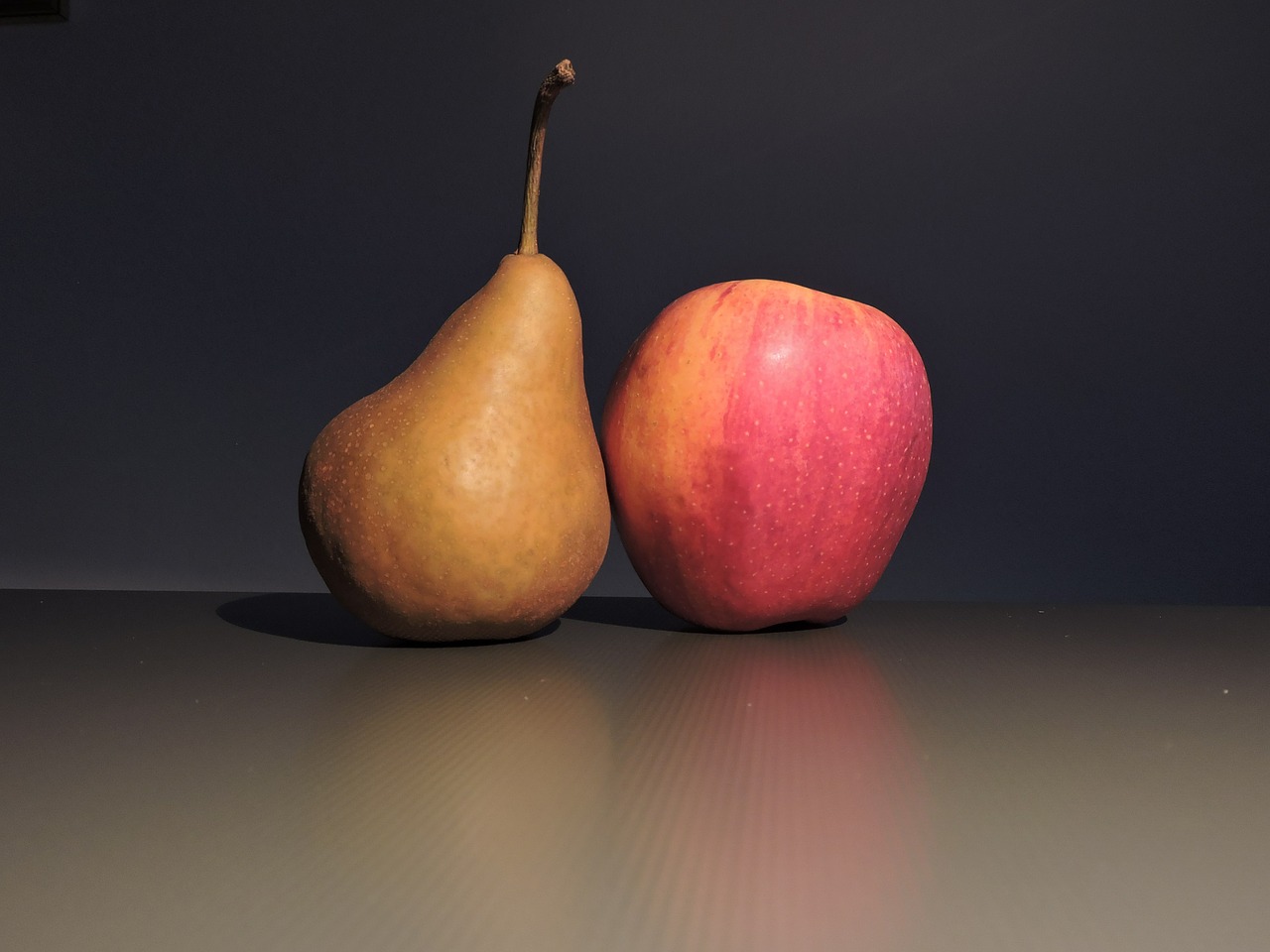
    Do you remember the fruity body shape descriptions being like an “apple” or a “pear”?  The apple is kinda round around the middle (you know – belly fat-ish, kinda beer belly-ish) and the pear is rounder around the hips/thighs.

    THAT is what we’re talking about here.

    Do you know which shape is associated with a higher risk of sleep apnea, blood sugar issues (e.g. insulin resistance and diabetes) and heart issues (high blood pressure, blood fat, and arterial diseases).

    Yup – that apple!

    And it’s not because of the subcutaneous (under the skin) fat that you may refer to as a “muffin top”.  The health risk is actually due to the fat inside the abdomen covering the liver, intestines and other organs there.

    This internal fat is called “visceral fat” and that’s where a lot of the problem actually is.  It’s this “un-pinchable” fat. 

    The reason the visceral fat can be a health issue is because it releases fatty acids, inflammatory compounds, and hormones that can negatively affect your blood fats, blood sugars, and blood pressure.

    And the apple-shaped people tend to have a lot more of this hidden visceral fat than the pear-shaped people do.

    So, as you can see, where your fat is stored, and your waist circumference matters more than how much you weigh.


    Am I an apple or a pear?

    It’s pretty simple to find out if you’re in the higher risk category or not. The easiest way is to just measure your waist circumference with a measuring tape.  You can do it right now.

    Women, if your waist is 35” or more you could be considered to have “abdominal obesity” and be in the higher risk category.  Pregnant ladies are exempt, of course.

    For men the number is 40”.

    Of course this isn’t a diagnostic tool.  There are lots of risk factors for chronic diseases.  Waist circumference is just one of them.

    If you have concerns definitely see your doctor.


    Tips for helping reduce some belly fat:

    • Eat more fibre.  Fibre can help reduce belly fat in a few ways.  First of all it helps you feel full and also helps to reduce the amount of calories you absorb from your food. Some examples of high-fibre foods are brussels sprouts, flax and chia seeds, avocado, and blackberries.
    • Add more protein to your day.  Protein reduces your appetite and makes you feel fuller longer.  It also has a high TEF (thermic effect of food) compared with fats and carbs and ensures you have enough of the amino acid building blocks for your muscles.
    • Nix added sugars.  This means ditch the processed, sweetened foods, especially those sweet drinks (even 100% pure juice).
    • Move more.  Get some aerobic exercise.  Lift some weights.  Walk and take the stairs.  It all adds up.
    • Stress less.  Seriously!  Elevated levels in the stress hormone cortisol have been shown to increase appetite and drive abdominal fat.
    • Get more sleep.  Try making this a priority and seeing how much better you feel (and look).


    As a general rule of thumb, if you want a more reliable and healthy measurement to “chase”, ignore the scale weight and aim to get your waist circumference down to half your height.


  • Why Is My Metabolism Slow?

    Why Is My Metabolism Slow?

    You may feel tired, cold or that you’ve gained weight.  Maybe your digestion seems a bit more “sluggish”.

    And you might naturally be asking “Why is my metabolism slow?”

    Why does this happen?  Why do metabolic rates slow down?


    What Can Slow My Metabolism?

    Metabolism includes all of the biochemical reactions in your body that use nutrients and oxygen to create energy. 

    And there are lots of factors that affect how quickly (or slowly) it works, i.e. your “metabolic rate” (which is measured in calories).

    But don’t worry – we know that metabolic rate is much more complicated than the old adage “calories in calories out”! 

    In fact it’s so complicated I’m only going to list a few of the common things that can slow it down.

    Examples of common reasons why metabolic rates can slow down:

    • low thyroid hormone
    • your history of dieting
    • your size and body composition
    • your activity level
    • lack of sleep

    We’ll briefly touch on each one below and I promise to give you better advice than just to “eat less and exercise more”.


    Low Thyroid Hormones

    Your thyroid is the master controller of your metabolism. 

    When it produces fewer hormones your metabolism slows down.  

    The thyroid hormones (T3 & T4) tell the cells in your body when to use more energy and become more metabolically active.  

    Ideally it should work to keep your metabolism just right.  But there are several things that can affect it and throw it off course.  

    Things like autoimmune diseases and mineral deficiencies (e.g. iodine or selenium) for example.

    Tip: Talk with your doctor about having your thyroid hormones tested.


    Your History of Dieting

    When people lose weight their metabolic rate often slows down. 

    This is because the body senses that food may be scarce and adapts by trying to continue with all the necessary life functions and do it all with less food. 

    While dieting can lead to a reduction in amount of fat it unfortunately can also lead to a reduction in the amount of muscle you have.  As you know more muscle means faster resting metabolic rate.

    Tip: Make sure you’re eating enough food to fuel your body without overdoing it.


    Your Size and Body Composition

    In general, larger people have faster metabolic rates.  This is because it takes more energy to fuel a larger body than a smaller one. 

    However, you already know that gaining weight is rarely the best strategy for increasing your metabolism.

    Muscles that actively move and do work need energy.  Even muscles at rest burn more calories than fat. 

    This means that the amount of energy your body uses depends partly on the amount of lean muscle mass you have. 

    Tip: Do some weight training to help increase your muscle mass.

    Which leads us to…


    Your Activity Level

    Aerobic exercise temporarily increases your metabolic rate.  Your muscles are burning fuel to move and do “work” and you can tell because you’re also getting hotter.

    Even little things can add up. 

    Walking a bit farther than you usually do, using a standing desk instead of sitting all day, or taking the stairs instead of the lift can all contribute to more activity in your day.

    Tip:  Incorporate movement into your day.  Also, exercise regularly.


    Lack of Sleep

    There is plenty of research that shows the influence that sleep has on your metabolic rate.  The general consensus is to get 7-9 hours of sleep every night.

    Tip: Try to create a routine that allows at least 7 hours of sleep every night. 


    None of these tips contradict the “calories in calories out” paradigm. They ARE the very things that affect calorie balance.

    Don’t forget your health and your lifestyle are just as important as weighing your dinner.


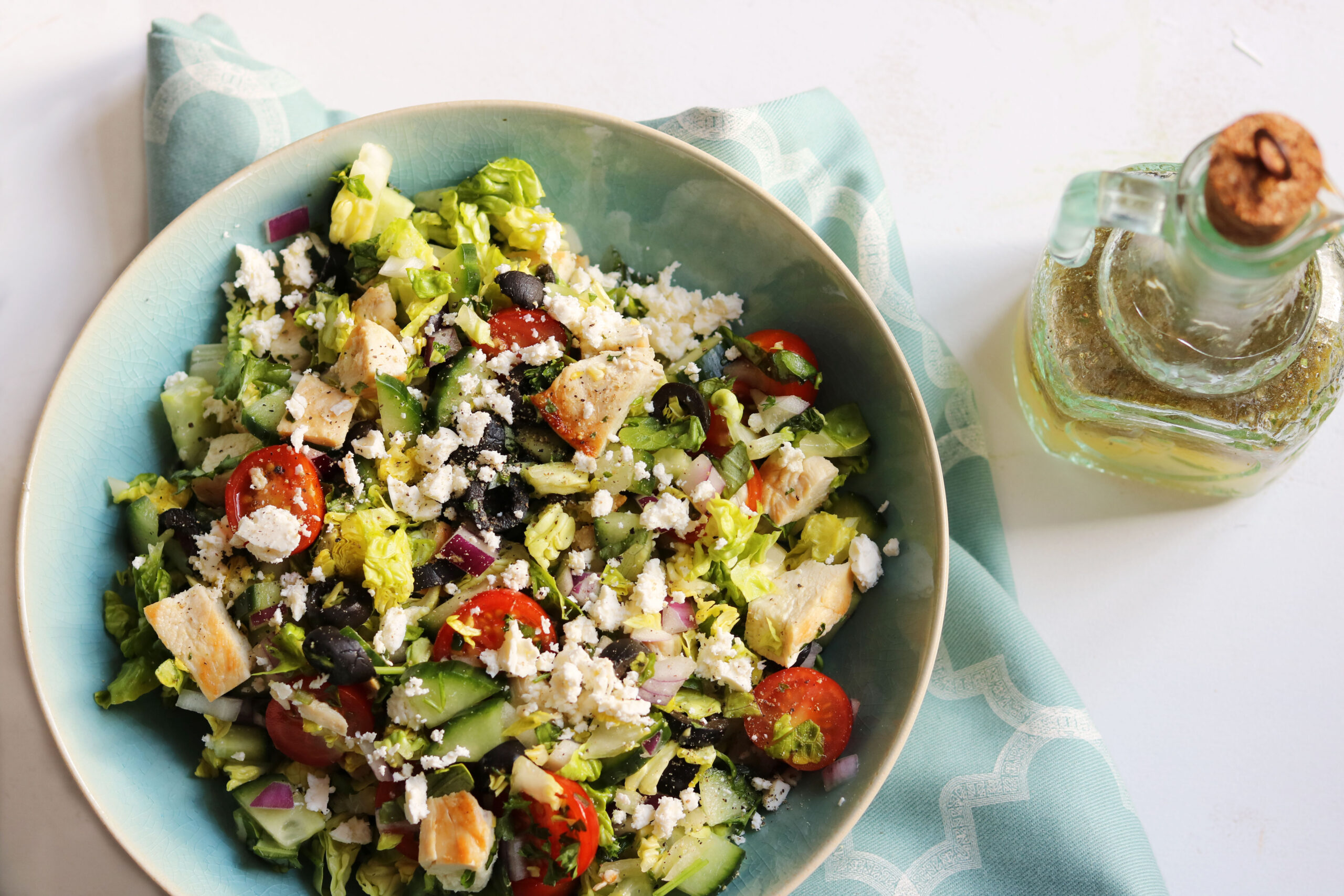
  • Mediterranean Chicken Salad

    Mediterranean Chicken Salad

    Mediterranean Chicken Salad

    What you need:

    For the dressing:

    •2 tbsp. lemon juice

    •2 tbsp. olive oil

    •¼ tsp. herbs de Provence

    •1 tsp. minced garlic

    •1 tbsp. apple cider vinegar


    For the salad:

    •10.5oz. (300g) chicken breast, cooked, chopped

    •1 oz. (30g) feta cheese, crumbled

    •2 cups (150g) iceberg lettuce, chopped

    •handful parsley, chopped

    •handful basil, chopped

    •1 small red onion, finely chopped

    •¼ cucumber, chopped

    •6 cherry tomatoes, halved

    •10 black olives, sliced

    What you need to do:

    To prepare your Mediterranean Chicken Salad first prepare the dressing by mixing all the dressing ingredients together in a cup. Season to taste with salt and pepper.

    Next, prepare and chop all the salad ingredients and place in a bowl. Pour over the dressing and mix well.

     Divide between two bowls and serve.

    Serves: 2

    Prep: 10 mins.

    Cook: 0 mins

    Approx nutrition per serve:

    Cals: 381

    Protein: 45g

    Carbs: 10g

    Fats: 29g

  • Coffee – Who Can Drink It and Who Should Avoid It?

    Coffee – Who Can Drink It and Who Should Avoid It?

    Coffee is one of those things – you either love it or hate it. Personally, I love it!

    You know if you like the taste or not (or if it’s just a reason to drink sugar and cream). You know how it makes you feel (i.e. your gut, your mind, etc.).

    But then you see all those crazy headlines that one day say coffee is great, and the next day that you should avoid it!

    So what should you believe? And should you keep drinking it?

    Who should drink and who should avoid coffee?

    Well, there is actual science behind why different people react differently to it. It’s a matter of your genetics and how much coffee you’re used to drinking.

    NOTE: Coffee does not equal caffeine. Coffee contains between 50-400 mg of caffeine/cup, averaging around 100 mg/cup. Coffee is one of the most popular ways to consume this stimulant. 

    But… a cup of coffee contains a lot of things over and above the caffeine. Not just water, but antioxidants, and hundreds of other compounds. These are the reasons drinking a cup of coffee is not the same as taking a caffeine pill. And decaffeinated coffee has a lot less caffeine; but, it still contains some.

    Let’s look at caffeine metabolism, its effects on the mind and body, and whether coffee drinkers have higher or lower risks of disease. Then I’ll give you some things to consider when deciding if coffee is for you or not.


    Caffeine Metabolism

    Not all people metabolise caffeine at the same speed. How fast you metabolise caffeine will impact how you’re affected by the caffeine. In fact, caffeine metabolism can be up to 40x faster in some people than others.

    About half of us are “slow” metabolisers of caffeine. We can get jitters, heart palpitations, and feel “wired” for up to 9 hours after having a coffee. The other half is “fast” metabolisers of caffeine. They get energy and increased alertness and are back to normal a few hours later.

    This is part of the reason those headlines contradict each other so much – because we’re all different!


    The Effects of Coffee (and Caffeine) on the Mind and Body

    NOTE: Most studies look at caffeinated coffee, not decaf.

    The effects of coffee (and caffeine) on the mind and body also differ between people; this is partly from the metabolism I mentioned. But it also has to do with your body’s amazing ability to adapt (read: become more tolerant) to long-term caffeine use. Many people who start drinking coffee feel the effects a lot more than people who have coffee every day.

    Here’s a list of these effects (that usually decrease with long-term use):

    • Stimulates the brain
    • Boosts metabolism
    • Boosts energy and exercise performance
    • Increases your stress hormone cortisol
    • Dehydrates

    So, while some of these effects are good and some aren’t, you need to see how they affect you and decide if it’s worth it or not.


    Coffee and Health Risks

    There are a ton of studies on the health effects of coffee, and whether coffee drinkers are more or less likely to get certain conditions.

    Here’s a quick summary of what coffee can lead to:

    • Caffeine addiction and withdrawal symptoms (e.g. a headache, fatigue, irritability)
    • Increased sleep disruption
    • Lower risk of Alzheimer’s and Parkinson’s
    • Lower risk of developing type 2 diabetes
    • Lower risk of certain liver diseases
    • Lower risk of death (“all cause mortality”)
    • Mixed reviews on whether it lowers risks of cancer and heart disease

    Many of the health effects exist even for decaf coffee (except the caffeine addiction and sleep issues).

    NOTE: What’s super-important to note here is that coffee intake is just one of many, many factors that can affect your risks for these diseases. Please never think regular coffee intake is the one thing that can help you overcome these risks. 

    You are health-conscious and know that eating a nutrient-rich whole foods diet, reducing stress, and getting enough sleep and exercise are all critical things to consider for your disease risk. It’s not just about the coffee.


    Should You Drink Coffee or Not?

    There are a few things to consider when deciding whether you should drink coffee. No one food or drink will make or break your long-term health.

    Caffeinated coffee is not recommended for:

    • People with arrhythmias (e.g. irregular heartbeat)
    • People who often feel anxious
    • People who have trouble sleeping
    • People who are pregnant
    • Children and
    •  teens.

    If none of these apply, then monitor how your body reacts when you have coffee. Does it:

    • Give you the jitters?
    • Increase anxious feelings?
    • Affect your sleep?
    • Give you heart palpitations?
    • Affect your digestion (e.g. heartburn, etc.)?
    • Give you a reason to drink a lot of sugar and cream?

    Depending on how your body reacts, decide whether these reactions are worth it to you. If you’re not sure, I recommend eliminating it for a while and see the difference.

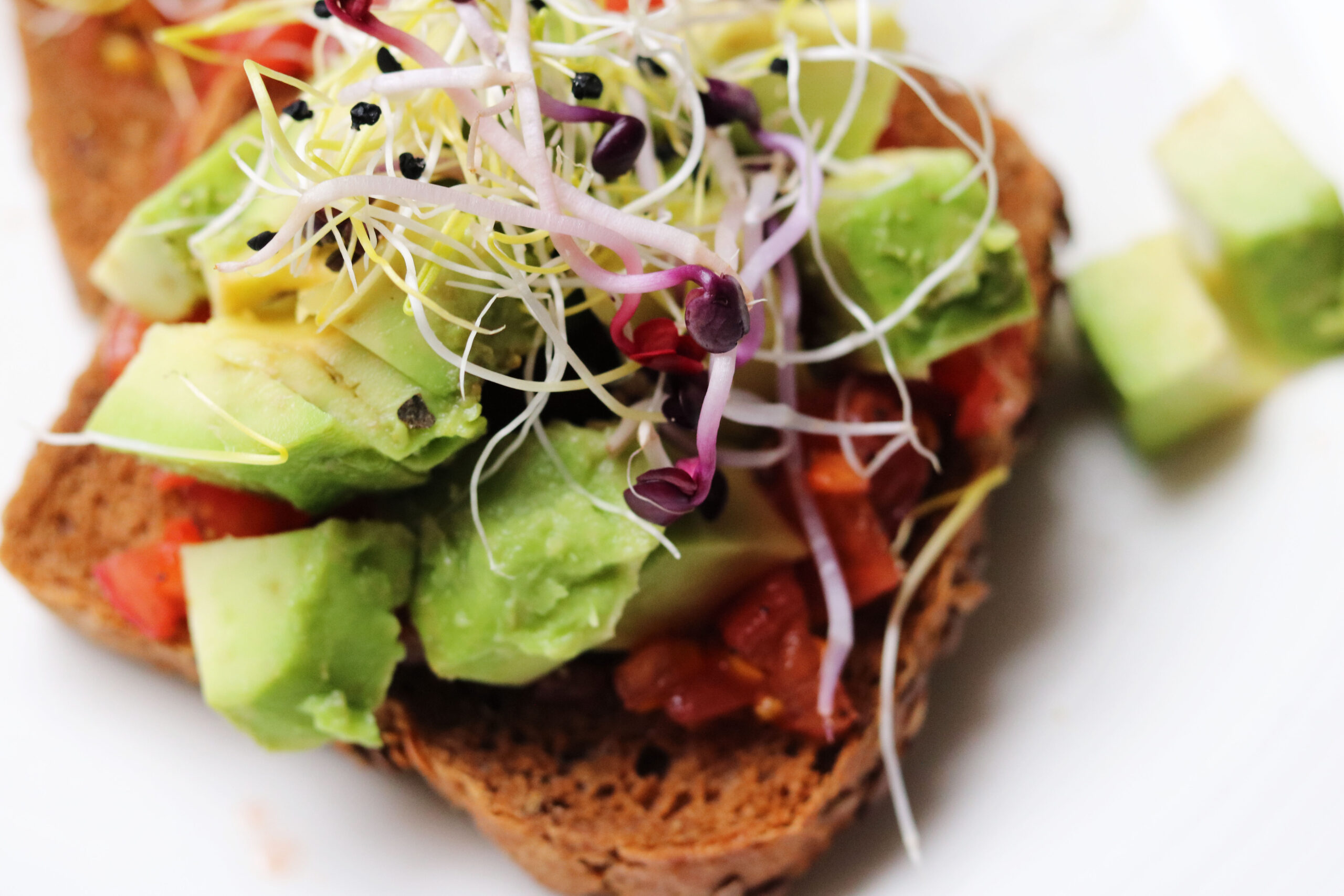
  • Avocado on Toast

    Avocado on Toast

    Avocado on Toast

    What you need:

    •4 small slices whole wheat bread

    •1 large tomato, diced

    •2 tsp. virgin olive oil

    •1 avocado

    •handful of spicy sprouts

    What you need to do:

    Toast the bread. In the meantime, finely dice the tomato and place it in a small bowl. Mix in the oil and season with salt and pepper.

    Cut the avocado in half and remove the stone. Scoop out the flesh with a spoon and cut into cubes.

    To serve spread the tomatoes over the toast, top with avocado cubes and sprouts. Season with ground pepper and serve immediately.

    Serves: 2

    Prep: 10 mins.

    Cook: 0 mins

    Approx nutrition per serve:

    Cals: 195

    Protein: 5g

    Carbs: 16g

    Fats: 11g

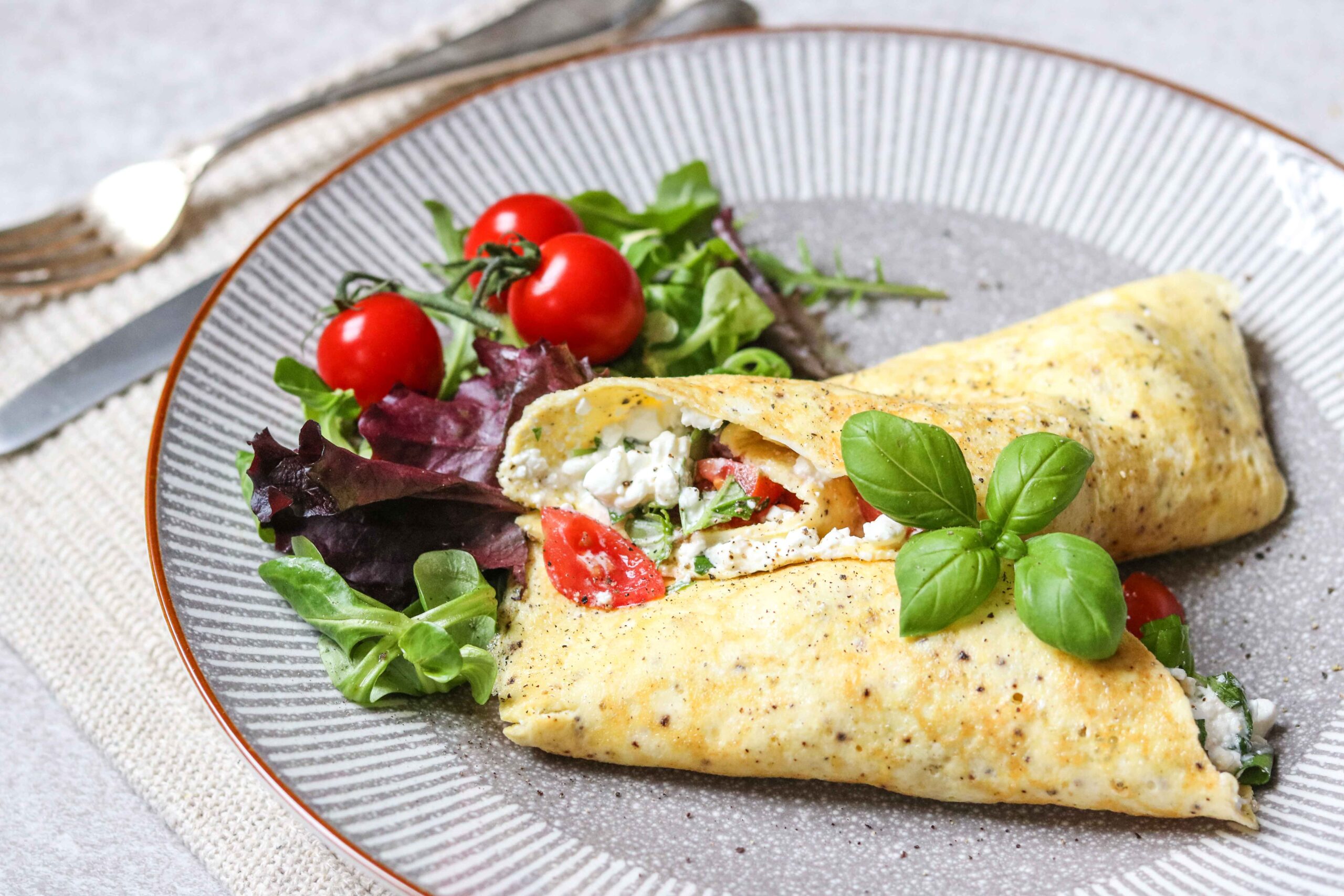
  • Omelette with Cottage Cheese and Basil

    Omelette with Cottage Cheese and Basil

    Omelette with Cottage Cheese and Basil

    What you need:

    •6 large eggs

    •4 tbsp. water

    •1 tbsp. oil or butter

    •bunch fresh basil

    •200g cottage cheese

    •12 cherry tomatoes

    What you need to do:

    Beat the eggs with the water and season with salt and pepper.

    Heat ¼ oil in a frying pan and bake 1 thin omelette, repeat until you have 4 omelettes. Keep them warm under aluminium foil.

    Chop the basil finely and mix with the cottage cheese. Season with freshly ground pepper.

    Cut the tomatoes into quarters. Divide the cottage cheese and tomato over the omelettes and roll them up. Cut diagonally and serve immediately.

    Serves: 4

    Prep: 10 mins.

    Cook: 10 mins

    Approx nutrition per serve:

    Cals: 200

    Protein: 15g

    Carbs: 3g

    Fats: 14g

  • What Is Intuitive Eating?

    What Is Intuitive Eating?

    What is intuitive eating?

    Trying to explain intuitive eating is like trying to learn carpentry by sitting on a chair. You have to do it to understand it. There are no hard and fast rules here because the entire process is a thoughtful journey that takes into account your emotions too.

    Unlike conventional diets, you’re not given a list of foods to avoid or given a specific calorie count to meet. There’s no bodyfat percentage to tell you if you’re obese or just overweight.

    There’s no focus on numbers or goals. You let your body tell you how it feels and you plan your meals from there.

    That’s why it’s called intuitive eating.

    The first step will be to practice mindfulness throughout the day. You’ll be observing how you feel, when you’re hungry, when you crave for food and so on.

    There’s no judgment here. It’s just introspection so that you have a better understanding of the link between your thoughts and actions. This is especially helpful for those who have the habit of emotional eating.

    Mindfulness will show you that when you’re stressed out or depressed, you tend to reach for the unhealthy foods. You’ll also realise that you might feel guilty and sad after you’ve indulged in the foods you were trying to avoid.

    Intuitive eating requires you to pay attention to how your body feels after a meal. Journaling while you’re practicing intuitive eating is very important. 

    Write down the foods you ate and note how you felt after the meal. The next day, observe if you’re lethargic or energetic. Did you have tummy issues? All these are indicators of the effect the food you’re consuming is having on you.

    Most people just endure the discomfort and turn a blind eye to it and carry on with their negative eating habits. Intuitive eating enlightens you by showing you if the food you’re eating is hurting you or helping you.

    When you’re eating intuitively, you’ll have to ask yourself, “Am I really hungry?”

    Very often, emotional hunger is mistaken for physical hunger. By asking yourself this question, you’re forced to come to terms with why you want to eat. If your stomach is growling and your hunger has been gradually building up, by all means go ahead and eat.

    However, if you suddenly crave for chocolates, are you really hungry? Or just looking for a sugar high? – You’ll then need to ask yourself if eating the chocolate is in alignment with your goals and how important is it when compared to your goal.

    If you won’t sacrifice for what you want, what you want will become the sacrifice. The goal of intuitive eating is not to control you or guilt you into giving up all comfort foods. 

    It’s about arresting poor food decisions that are made on the spur of the moment. Control over your eating has been placed back in your hands.

    You’re not a mindless food processor.

    Intuitive eating also has a scale with different levels of how full your stomach is. This is a concept and different people will feel it differently. But the general idea is that you should stop eating when you’re slightly full because it takes time for the stomach to register that you’re full.

    If you don’t take this delay into account, you’ll keep eating. By the time your stomach registers how much you’ve eaten, you could easily be overstuffed.

    Intuitive eating is ideal for people who are tired of diets and restriction. It’s for those who want something natural and easy to follow without having to starve yourself or eat foods you dislike.

    This way of eating is extremely effective and in the long run, it’s the better approach to keeping the excess pounds off.

    It’s not the easiest concept to immerse yourself in because it doesn’t have the clearly laid out guidelines that most diets have, but if you give it a try it just might be the best thing you’ve done for your health.


  • Everything You Think You Know About Healthy Eating Is Wrong

    Everything You Think You Know About Healthy Eating Is Wrong

    Everything You Think You Know About Healthy Eating is Wrong and it’s Making You Fat and Tired.

    Nutrition and diet info is everywhere, and every expert and their dog has an opinion!

    And each expert and association tries to lead you in their direction because they know best and their advice is going to help you.  Right?

    Well, maybe…

    Everyone has heard (and maybe lived through) the intense focus on how much you eat.  Calorie counting has gotten way too much attention because while this does affect your weight and energy level, it’s certainly not the “holy grail” of health. 

    Let’s focus a bit more on the often overlooked (and proven) benefits of what you eat and drink and how you eat and drink it.

    What you eat and drink

    The “calories in, calories out” philosophy (i.e. how much you eat) is being drowned out with research on other factors that may be just as important.  

    Don’t get me wrong limiting calories, carbs or fat will certainly help you lose weight but that’s simply not the only factor for long-term weight loss and maximum energy for everyone. 

    When the intense focus on how much we ate didn’t work in the long-run it wasn’t really a surprise. We kinda knew that already, didn’t we?

    You can certainly still continue to count your calories, carbs, and fat but don’t forget to also pay attention to what you eat. 

    Ideally, you need a varied diet full of minimally-processed foods (i.e. fewer “packaged” “ready-to-eat” foods).  This simple concept is paramount for weight loss, energy, and overall health and wellness.

    Every day this is what you should aim for:

    A colourful array of fruits and veggies at almost every meal and snack. You need the fibre, antioxidants, vitamins, and minerals.

    Enough protein.  Making sure you get all of those essential amino acids (bonus: eating protein can increase your metabolism).

    Healthy fats and oils (never “hydrogenated” ones).  There is a reason some fatty acids are called “essential” – you need them as building blocks for your hormones and brain as well as to be able to absorb essential fat-soluble vitamins from your uber-healthy salads.  

    Use extra virgin olive oil and coconut oil, eat your organic egg yolks, and get grass-fed meats when possible.  You don’t need to overdo it here.  Just make sure you’re getting some high-quality fats.

    How you eat and drink

    Also pay attention to how you eat and drink.

    Studies are definitely showing that this has more of an impact than we previously thought.

    Are you rushed, not properly chewing your food, and possibly suffering from gastrointestinal issues? Do you drink your food?

    When it comes to how you eat let’s first look at “mindful eating”.

    Mindful eating means to take smaller bites, eat slowly, chew thoroughly, and savour every bite.  Notice and appreciate the smell, taste and texture.  Breathe.

    This gives your digestive system the hint to prepare for digestion and to secrete necessary enzymes.

    This can also help with weight loss because eating slower often means eating less.  Did you know that it takes about 20 minutes for your brain to know that your stomach is full?

    Thought so!

    We also know that more thoroughly chewed food is easier to digest and it makes it easier to absorb all of those essential nutrients.

    And don’t forget about drinking your food. 

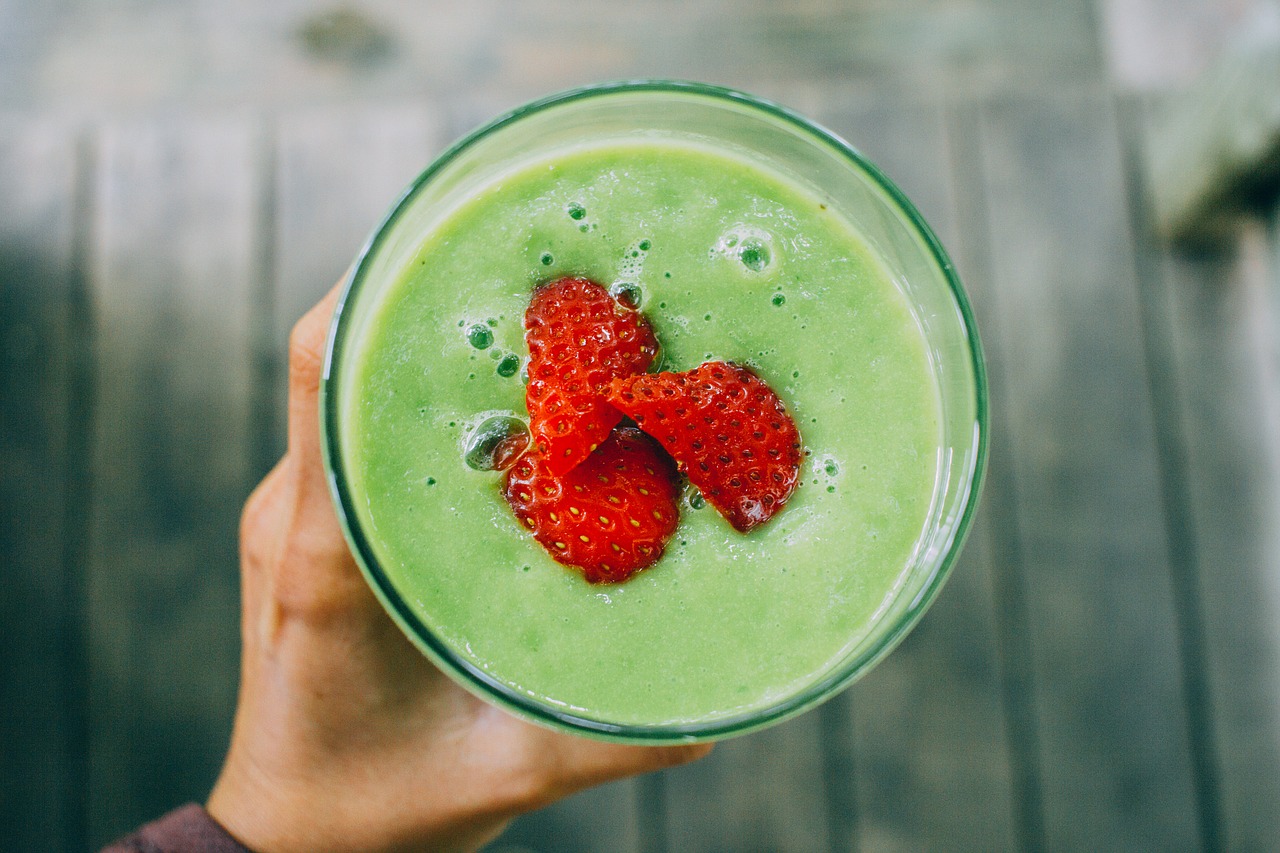
    Yes, smoothies can be healthy and a fabulously easy and tasty way to get in some fruits and veggies (hello leafy greens!) but drinking too much food can contribute to a weight problem and feelings of sluggishness. 

    Don’t get me wrong a green smoothie can make an amazingly nutrient-dense meal and is way better than stopping for convenient junk food – just consider a large smoothie to be a full meal not a snack.  And don’t gulp it down too fast.

    If your smoothies don’t fill you up like a full meal does try adding in a spoon of fibre like ground flax or chia seeds.

    In summary, consider not only how much you eat but also what and how you eat it.

  • Lose Weight By Adding These Inexpensive Foods to Your Diet

    Lose Weight By Adding These Inexpensive Foods to Your Diet

    You don’t need to spend a fortune on exotic fruits or strange supplements to lose weight!

    These common, inexpensive foods can help you get rid of the extra pounds:


    Beans

    Beans are some of the least expensive items you can put on a grocery list. Most stores sell large bags of various types of beans at low prices. You can find fresh, dried, and canned versions, so you can select the ones you like.

    Beans are a source of protein and help you stay full for longer. In addition, they have fibre and other nutrients that your body needs as you try to lose weight.

    Beans can be added to soups, chilli, casseroles, salads, and other dishes. You can even roast them to eat as a snack throughout the day.


    Bananas

    Bananas contain a starch that has been shown to help weight loss in studies. They also have nutrients like potassium that are essential for your health. Bananas can also satisfy your cravings for sweets!


    Oatmeal

     You can buy plain oatmeal in bulk and eat it for breakfast every day. Studies show that oatmeal is a great breakfast option because it gives you the nutrition you need, so you avoid feeling hungry during the day.

    If you eat oatmeal at the start of the day, you’re less likely to overindulge at lunch or dinner.

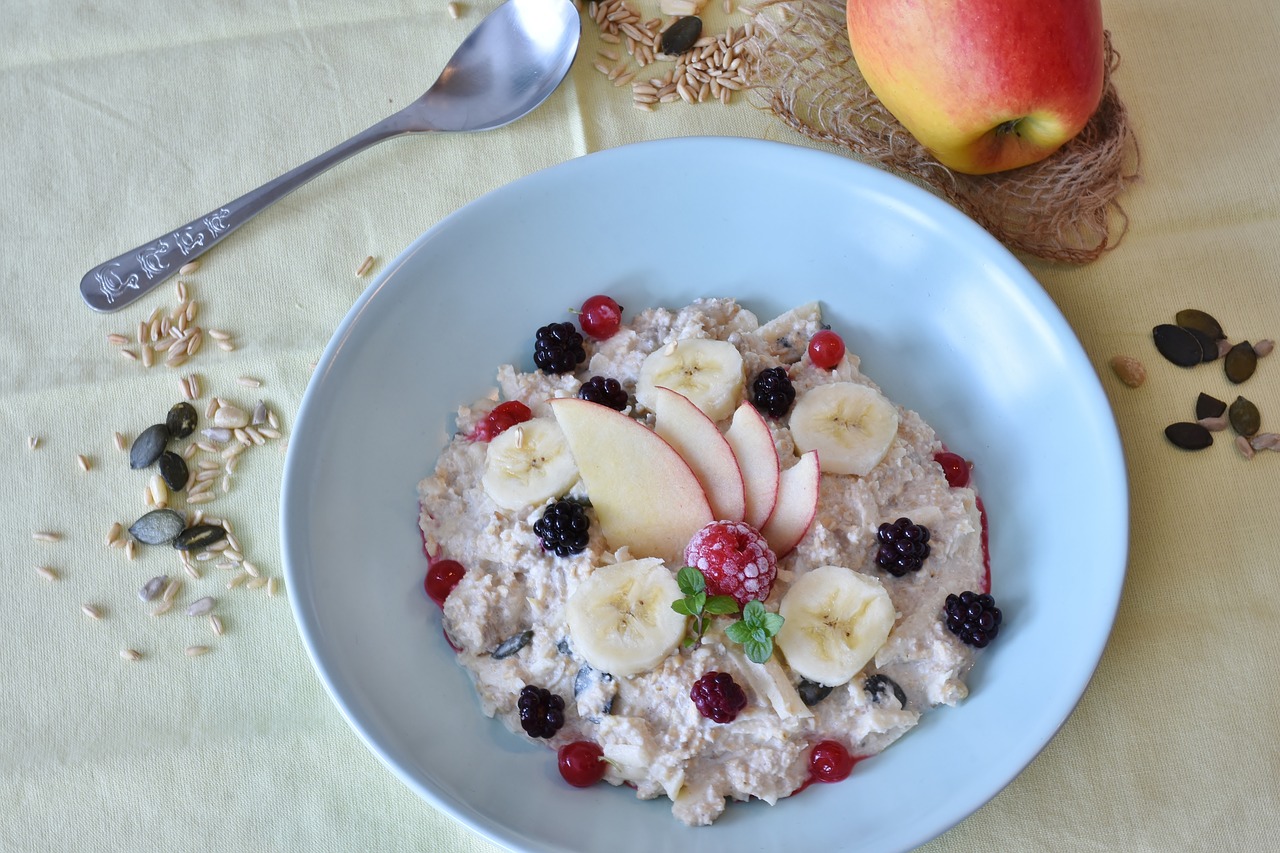
    Oatmeal is inexpensive and can be dressed up with fresh fruit, nuts, yogurt, or other simple additions.


    Broccoli

    Broccoli is inexpensive, easy to find in any supermarket, and research studies show that it can help you feel full. It has vitamins such as vitamin C and other nutrients you need as you battle your weight.

    If you hate the taste of raw broccoli, consider sautéing it with other vegetables. You can also find low-calorie sauces that help mask its taste, so it’s easier to eat.


    Multigrain pasta

    Multigrain pasta can help you with your carbohydrate needs and budget. The generic brands are even less expensive than the name brands. It’s important not to ignore your carbs because you need them for energy.

    Multigrain pasta can also have additional fibre compared to plain white pasta, and other added nutrients.

    It can help you lose weight because it will fill the craving for carbohydrates without making you turn to unhealthy junk food.


    Plain yogurt

    You can find inexpensive, plain yogurt in large pots. Yogurts with nuts and fruits tend to cost more, but you can add these items on your own and save money.

    Yogurt has been shown to help weight loss because it provides protein and makes you feel full. It’s a good snack that also has calcium and often has vitamin D. A large container can last for several days, so you can eat it for breakfast or as a snack.


    Your grocery budget doesn’t have to suffer if you’re trying to lose weight. Take advantage of foods that are not expensive and still tasty that will help you eliminate the extra pounds. You can stay on budget and feel healthier at the same time.

  • High Protein Mexican Egg Roll Recipe

    High Protein Mexican Egg Roll Recipe

    High Protein Mexican Egg Rolls

    What you need:

    •7 oz. (200g) lean ground beef

    •1 tsp. Mexican seasoning

    •1 red sweet pepper, chopped

    •3 eggs

    •4 egg whites

    •1 tsp. coconut oil

    •2 handfuls baby spinach

    What you need to do:

    Heat a non-stick pan on medium heat and cook the beef, about 7 minutes. Season with the Mexican spices, salt & pepper. Once cooked transfer onto a plate, cover with tin foil and set aside.

    Using the same pan cook the peppers until slightly softened, about 5 mins.

    In a bowl, whisk the eggs and season with salt & pepper. Heat a separate pan with the coconut oil and pour in the eggs, cover with a lid and cook for a few minutes until cooked. Flip like a pancake if necessary to cook the other side.

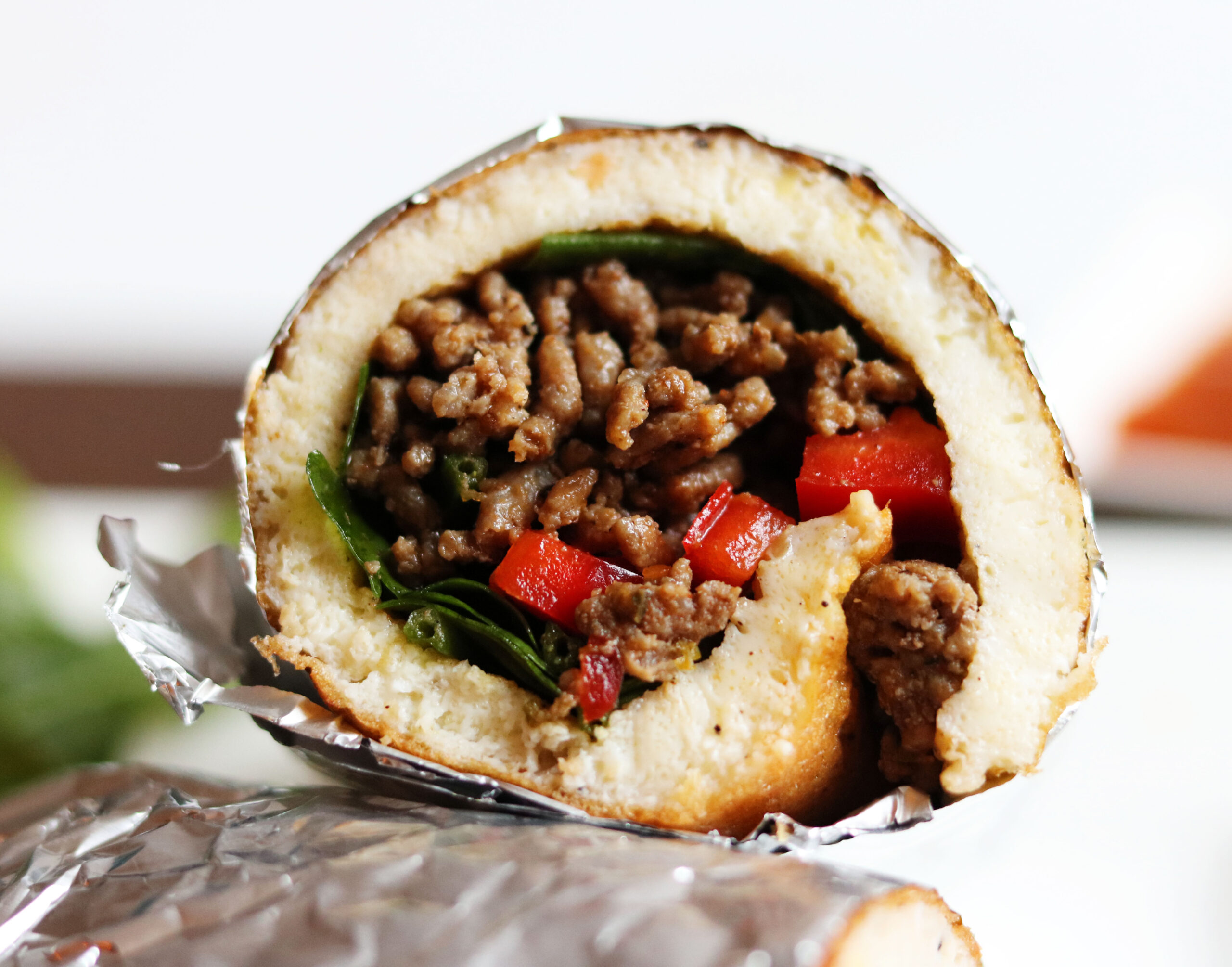
    Once cooked place the egg omelette on a piece of tin foil, top with spinach, cooked peppers and beef. Roll up wrapping in tin foil to secure the filling. Unwrap the top and enjoy. Delicious with salsa.

    Serves: 2

    Prep: 10 mins.

    Cook: 10 – 15 mins

    Approx nutrition per serve:

    Cals: 313

    Protein: 38g

    Carbs: 5g

    Fats: 15g

>